
Serial Digital Interface (SDI) has long served as a reliable standard for professional video transmission. It delivers excellent image quality and low latency, making it ideal for broadcast environments. However, SDI relies on copper cables, which significantly limit transmission distance.
In real-world conditions, signal degradation often begins after a few hundred feet. This issue becomes even more noticeable at higher data rates, such as 3G-SDI, which supports 1080p video. Consequently, as production setups grow larger and more complex, these distance limitations create serious challenges.
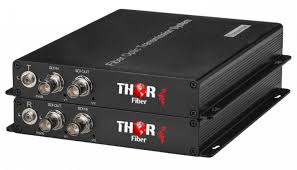
At the center of this transition is the 3G-SDI to Fiber converter, a device that plays a critical role in maintaining signal integrity while extending transmission capabilities far beyond the limits of standard SDI cables.
Understanding the Limits of Traditional SDI
Serial Digital Interface, commonly known as SDI, has long been a standard for professional video transmission. While SDI offers excellent signal quality and low latency, it has a key limitation.
First, fiber supports much longer transmission distances, often spanning several kilometers without noticeable signal loss. Additionally, fiber remains immune to electromagnetic interference, which makes it ideal for environments filled with electrical equipment or long cable runs.
Moreover, fiber offers significantly higher bandwidth. Because of this, it easily handles uncompressed high-definition and even ultra-high-definition video. As video standards continue to evolve, fiber remains a future-ready solution.
How a 3G-SDI to Fiber Converter Works
A 3G-SDI to Fiber converter acts as a bridge between traditional SDI equipment and modern fiber infrastructure. On one side, it receives a standard 3G-SDI signal from cameras, switchers, or playback systems. Then, it converts that signal into an optical format suitable for fiber transmission.
At the receiving end, another converter changes the optical signal back into SDI. As a result, the system integrates seamlessly with existing equipment. Throughout this process, the converter preserves video quality, timing, and synchronization without user intervention.
Practical Applications Across Multiple Industries
Fiber-based SDI transmission plays a critical role in many industries. For example, live broadcasters use it when cameras sit far from control rooms. Similarly, sports venues, houses of worship, convention centers, and corporate campuses rely on fiber to cover large distances reliably.
In surveillance and security systems, fiber enables high-resolution video to travel from remote locations to centralized monitoring centers without interference. In all of these cases, teams need to transmit high-quality video over long distances without compression.
Improved Reliability and Signal Integrity
Reliability remains one of the most important factors in professional video workflows. Signal dropouts, noise, or latency can disrupt live broadcasts or compromise security systems. Fortunately, fiber transmission minimizes these risks.
Because fiber does not suffer from electrical noise or ground loop issues, it delivers consistent and stable performance even in demanding environments. For this reason, many professionals now prefer fiber for mission-critical video paths.
Preparing for the Future of Video Transmission
As video resolutions increase and installations continue to expand, fiber video transmission is no longer optional. Instead, it has become a necessity. By converting 3G-SDI signals to fiber, organizations extend the life of existing SDI equipment while gaining the advantages of optical technology.
Final Thoughts
Ultimately, understanding why 3G-SDI to Fiber conversion matters comes down to three key factors: distance, quality, and reliability. By adopting fiber-based solutions, video professionals can build scalable, resilient systems that meet today’s demands and remain ready for the future.
